Brush or Comb? Choosing a Grooming Tool by Coat
Choose a gentle dog grooming brush or comb by coat length and texture, and learn how to check comfort before making grooming part of the routine.
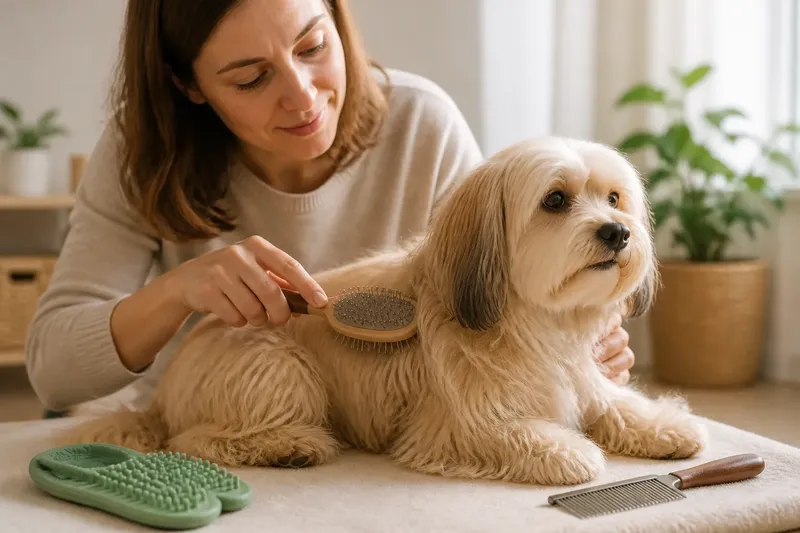
Your dog’s coat catches a twig on the walk, or a small knot appears behind an ear: should you reach for a brush or a comb? Choosing a dog grooming brush or comb is easier when you start with the coat’s length and texture, then let your dog’s comfort decide how far to go.
1. What should you notice before choosing a brush or comb?
Look at the coat where it grows, rather than judging by the hair lying on top. Part it gently with your fingers and notice whether it is smooth or woolly, close to the skin or long enough to tangle, and whether loose hair is gathering on the surface.
A brush usually covers a broader area and helps with loose hair or light tangles. A comb has individual teeth, so it can check narrow places and reveal knots that fingers or a brush may pass over. Neither tool is automatically kinder: a harsh brush, a forceful comb or a rushed hand can make either unpleasant.
- Short and smooth: consider a soft rubber grooming mitt or a gentle bristle brush.
- Long and silky: a soft pin brush may loosen surface tangles; a comb can check them afterwards.
- Dense or double-coated: use a suitable brush for loose coat, then a comb only where it can pass freely.
- Curly or woolly: a pin brush and a comb may both have a role, since tangles can form close to the skin.
2. Which tool suits a short, smooth coat?
For a short coat that lies flat, a soft rubber mitt is often a comfortable starting point. Its flexible surface can lift loose hair without the repeated scratching sensation that some dogs dislike from stiff bristles. A soft bristle brush is another option when the coat is smooth and the dog enjoys a light touch.
Use broad, gentle strokes in the direction the hair lies. A comb is rarely the main tool for this coat type, though a few careful passes can help you inspect a small area or check for a burr. If the dog flinches, turns away or tries to leave, pause rather than pressing on.
3. Does a long or silky coat need both?
Long hair can tangle where it rubs against itself: behind the ears, beneath a collar, around the legs and under the tail. A soft pin brush can loosen easy tangles over the surface; a comb then helps you check whether the hair underneath is clear.
Work in small sections, supporting the hair near the skin with your free hand so a pull on a knot does not tug the skin. Start at the ends of a tangle and ease it apart gradually. If the comb catches, stop and return to fingers or the brush; dragging it through can turn grooming into a painful contest.
4. What works for a dense, double or curly coat?
A dense coat can hide loose hair and small knots beneath its outer layer. A brush suited to the coat can help loosen that material, while a comb can check places where tangles tend to gather. Avoid treating a thick coat as permission to press harder: reach the skin gently, without scraping it.
Curly and woolly coats can mat close to the skin, especially where there is friction or moisture. A pin brush may help separate manageable tangles, but a comb should glide rather than snag. For tight mats, soreness or a dog who cannot tolerate handling, ask a professional groomer or veterinary professional for advice instead of pulling at the coat.
5. How can you tell whether the dog is comfortable?
Watch the dog as closely as the coat. Loose posture, staying nearby and settling into the routine can suggest the touch is acceptable; lip licking, moving away, freezing, growling or repeatedly turning to watch your hand are reasons to stop and reassess. A dog may dislike one tool, one body area or the handling itself.
Say you have a long-haired dog who stays relaxed while you brush the back but steps away when you reach behind an ear. Pause there, offer a break and later try a few gentle strokes with your fingers before bringing the brush near; the useful result is that you can see whether the dog accepts that contact, not that the knot must be removed in one sitting.
Keep the first sessions brief enough to end while your dog is still at ease. Let the dog sniff the tool, reward calm participation if that suits your routine, and stop before either of you becomes frustrated. For advice on a particular coat or skin concern, follow the product maker’s directions and consult a qualified groomer or veterinary professional where appropriate.
6. Which questions help settle the choice?
Can I use a comb instead of a brush?
Sometimes, but a comb covers less coat at once and may pull if used to force out tangles. It is most useful for checking a section or easing a small, loose knot when it passes without resistance.
Should I brush before combing?
For many longer coats, gently brushing first can loosen surface tangles, with a comb used afterwards to check the section. On a short, smooth coat, a comb may add little to the routine.
What if my dog dislikes the sound or feel of a brush?
Put the brush aside and try a softer tool, such as a rubber mitt, if it suits the coat. Introduce it calmly and stop if the dog shows discomfort; repeated forcing can make future handling harder.
When is a knot too difficult to work through at home?
If a mat is tight against the skin, painful to touch or too large to ease apart without pulling, leave it alone and seek help from a professional groomer or veterinary professional. Do not cut close to the skin, where it can be difficult to tell coat from skin.
7. What is not worth the effort?
There is little point buying several tools before checking how one suitable option feels to your dog. Nor does every loose strand need chasing: concentrate on comfortable handling and tangles that need attention, rather than making a grooming session last until the coat looks immaculate.
The best dog grooming brush or comb is the one that suits the coat and lets your dog remain comfortable. Start with a small area, watch the response and adjust the tool or pause when the dog asks for space.