The Greeting-at-the-Door Myth: Excitement Is Not a Manners Plan
A predictable dog greeting-at-the-door routine gives your dog a clearer job, helps visitors arrive calmly and replaces waiting for excitement to fade.
Your dog hears the latch, skids across the hall and launches towards the visitor. If you are waiting for this greeting-at-the-door excitement to disappear with age, you may be waiting a long time: settling is a behaviour to teach, not a birthday milestone.
A door routine gives everyone a small, repeatable job before the excitement peaks. It need not look polished; it needs to be clear enough that your dog can begin to recognise what happens next.
Why doesn’t a dog simply grow out of door excitement?
The door is a bundle of vivid clues: footsteps, voices, a bell, a moving handle and a person appearing in the hallway. For a dog who wants to greet, each clue predicts social contact. Repeating the same rush can make that sequence familiar without teaching an alternative.
Age may bring changes in energy or impulse control, but it does not tell a dog what to do when the bell rings. Nor does a visitor’s sudden arrival create ideal conditions for learning. A predictable routine lets you practise the response before the doorway becomes crowded and exciting.
What should the routine teach instead?
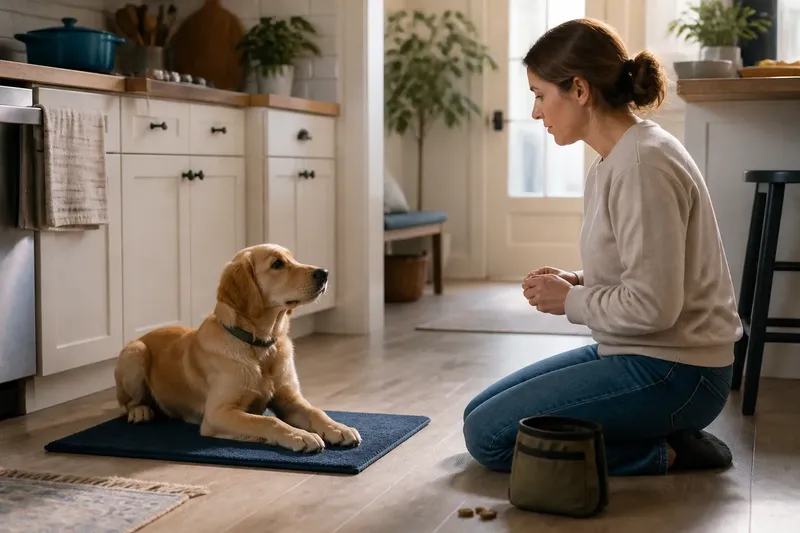
Choose one simple action your dog can perform away from the door, such as going to a mat or standing behind a baby gate. The point is not a perfect sit or a long stay. It is a safe, recognisable place where you can manage the greeting and reward calm choices.
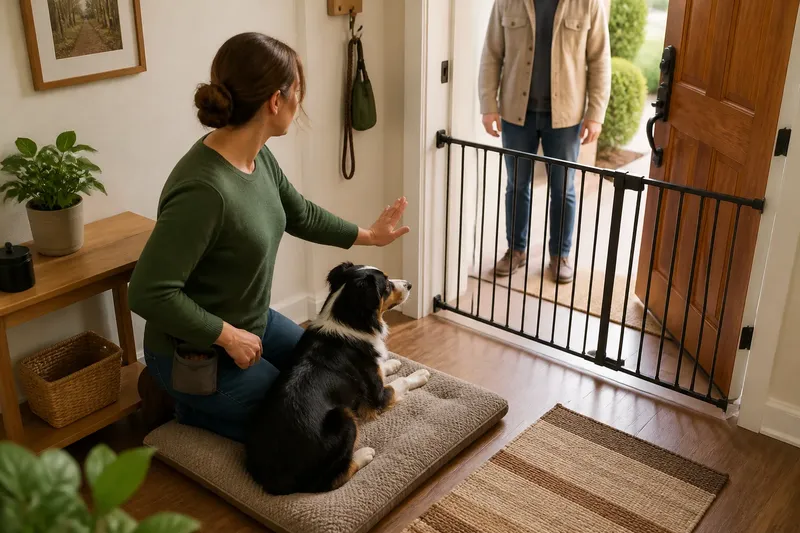
Keep the cue and the sequence consistent. For instance, the door sound can prompt you to guide your dog to the mat, reward them there, and only then decide whether to open the door. A dog who cannot yet manage that sequence with a visitor present can remain behind a gate while the guest comes in.
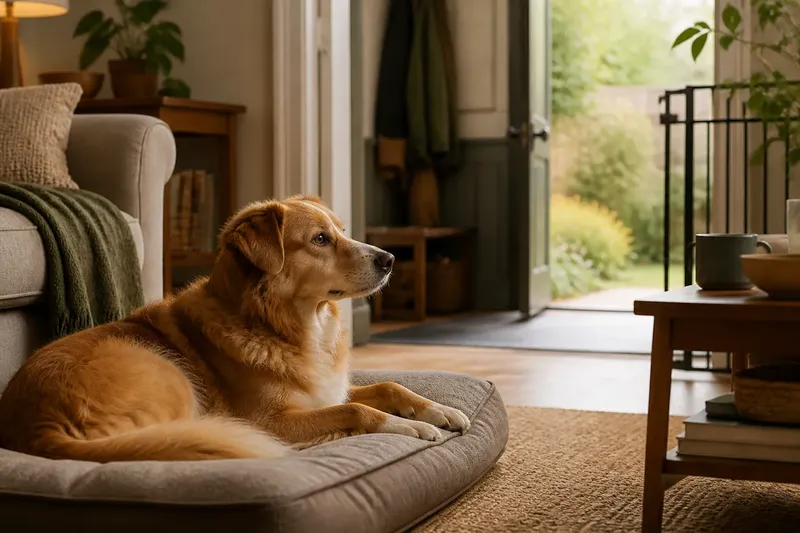
- Pick a spot: Use a mat or bed far enough from the entrance that the door can open without your dog being in the way.
- Choose a cue: Use one short phrase, such as “mat”, and say it once in a level voice.
- Prepare rewards: Keep small treats in a container near the spot, but out of your dog’s reach when no one is practising.
- Set a boundary: Use a secure gate or closed interior door if your dog needs more distance from arriving people.
- Brief visitors: Ask them to pause outside and wait for your signal rather than leaning over, calling to, or touching the dog immediately.
Use familiar equipment only as intended, and follow its maker’s instructions. If your dog has a history of biting, snapping or intense fear around visitors, ask a qualified behaviour professional or your vet for individual guidance rather than trying to manage the situation with a new routine alone.
How can you build the routine over a week?
Think of the week as a chance to make the sequence familiar, not a deadline for a finished greeting. Keep practice brief and end while your dog is still able to notice you and take a reward.
On the first two days, what should you practise?
Start when nobody is expected. Say your cue, help your dog reach the mat, then reward them there. Repeat at quiet moments around the house so the mat becomes a useful destination rather than a place that appears only when the doorbell sounds.
When should you add a door sound?
Once your dog can find the mat readily, introduce a mild version of a familiar sound, such as a gentle knock from another person inside the home. Cue the mat and reward your dog for going there; if the sound sends them charging or barking, make it quieter or return to a silent cue.
How should you practise with a visitor?
Arrange a willing visitor who can follow your instructions and wait outside. Keep your dog behind a gate or on the mat at a comfortable distance, reward the response, and let the visitor enter only if the dog remains able to respond; otherwise, keep the barrier in place and make the greeting less direct.
What should you do when the real bell rings?
Use the easiest safe version of the routine, not the hardest version you have practised. Guide your dog behind the gate, or ask them to go to the mat if they can do so, then greet the person while your dog has space; you can reward calm behaviour without bringing the visitor close.
What if your dog barks, jumps or ignores the cue?
Lower the difficulty rather than repeating the cue louder. A dog who is barking at the door may be too aroused to follow a familiar request, so create distance, use a barrier and let the visitor wait until the hallway is manageable.
If your dog jumps, the visitor can turn slightly away and keep hands to themselves while you guide the dog back to the mat or behind the gate. Avoid pushing, shouting or grabbing at the collar in the rush; those actions can add more movement and tension to an already busy moment.
Say you have a dog called Miso who races to the door whenever the buzzer sounds. You arrange for a neighbour to knock softly while Miso is in the hall, cue the mat, and reward a pause there; if Miso rushes forward, the neighbour waits outside while you use the gate, so the observable result you are aiming for is a quieter, more manageable arrival rather than an instant perfect greeting.
Which household details make the plan easier?
Put the mat where it will not block the path between the entrance and the rest of the home. Keep the gate accessible, and agree with household members on the same cue and visitor rule. If one person invites the dog to the door while another sends them away, the sequence becomes harder to predict.
For deliveries or unexpected callers, management counts as a successful response. Your dog can stay in another room with a chew or behind a secure gate while you answer; there is no need to turn every arrival into a training session.
It is not worth asking guests to help by feeding treats from their hands or coaxing a reluctant dog closer. That can add pressure, especially for a dog who wants distance, and it puts the visitor in charge of a situation you should manage.
How can you tell whether the routine is helping?
Look for small, observable changes: your dog turns towards the mat when they hear the cue, can take a treat, or stays behind the gate while someone enters. These are useful signs even if barking continues or the dog needs your help to get to their place.
If your dog becomes more distressed, cannot settle behind a barrier, or reacts aggressively, pause visitor practice and seek advice from a qualified professional. A routine can make ordinary arrivals more predictable, but it is not a substitute for individual support when fear or safety concerns are involved.
Keep the greeting-at-the-door routine modest: cue a place, create enough distance, and let the visitor enter at a pace your dog can handle. The useful change is not a sudden transformation with age, but a familiar household pattern that gives both dog and guest a clearer next move.