The Long Walk from Kennel Yard to Living Room
A dog’s place in the home has shifted from guarded yard to shared rooms. See how household roles changed and what suits your home today.
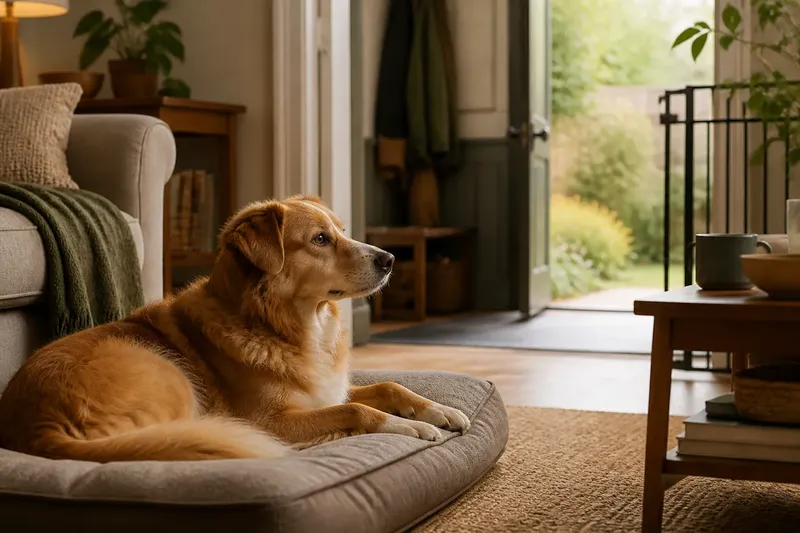
Where should a dog belong in a home? The question sounds practical, but the dog’s journey from kennel yard to living room tells a longer story about how people have made room for animals in daily life. A dog might sleep by the hearth, watch the back gate, or have a bed beside a desk; each arrangement reflects a different idea of companionship and care.
There is no single domestic pattern that suits every dog or household. The useful choice is not between an old-fashioned yard and a modern sofa, but among ways of sharing space: keeping a dog mainly in a defined area, giving it broad access to family rooms, or combining the two with flexible boundaries.
How did dogs move from the yard into the home?
For much of domestic life, a dog’s work and sleeping place were closely connected. Dogs guarded property, helped with livestock, or lived near workshops and entrances where they could respond to activity. A kennel or sheltered outdoor spot could offer a practical base, while people and dogs still interacted throughout the day.
That arrangement did not mean every dog lived apart from people, nor that every household treated dogs alike. In many homes, a dog might be welcomed indoors during bad weather or rest near a warm hearth, then return to a yard when household work resumed. The boundary was porous, shaped by local customs, the dog’s role, and the rooms available.
As more dogs became valued chiefly as companions, their place shifted towards shared indoor life. The household dog could follow its people from room to room rather than being assigned a single task or territory. Furniture, floors and routines adapted too: a water bowl by the kitchen, a bed under a table, or a gate across a doorway made the animal’s presence part of ordinary domestic planning.
This change is not simply a tale of progress from neglect to affection. A dog living indoors may enjoy more company, yet still need quiet, predictable rest and chances to spend time outside. A dog with an outdoor area may have room to move, yet still need frequent contact and thoughtful shelter. The question is how well the arrangement serves the dog and the people sharing the home.
Which household arrangement fits your dog?
Think of domestic life as three broad options rather than a test of devotion. The right one depends on the dog’s comfort, the household’s rhythms and the physical layout—not on whether a dog is allowed on a particular piece of furniture.
A defined indoor base
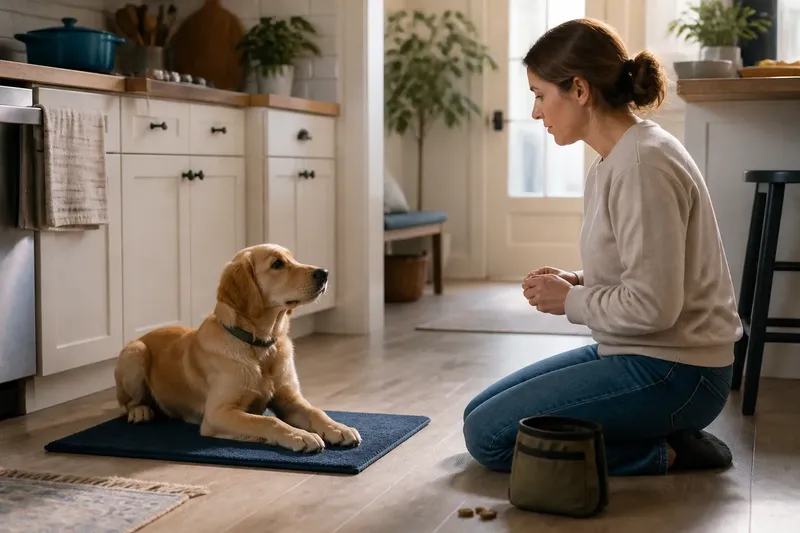
A dog can have a dependable resting place in one room or part of a room, with access to household activity at suitable times. This can suit a dog that settles better away from busy foot traffic, a home with a shared entrance, or a family that wants a clear sleeping and feeding area.
The base should not become social isolation. A dog left for long stretches behind a closed door may miss company and ordinary interaction, even if the space is comfortable. A bed in a quiet corner of the living room can provide retreat while keeping the dog near the household.
Broad access to shared rooms
Some dogs are comfortable moving through most of the home and resting near whichever person is there. This can suit a settled dog in a household whose rooms can be made safe and whose members are happy to share everyday space.
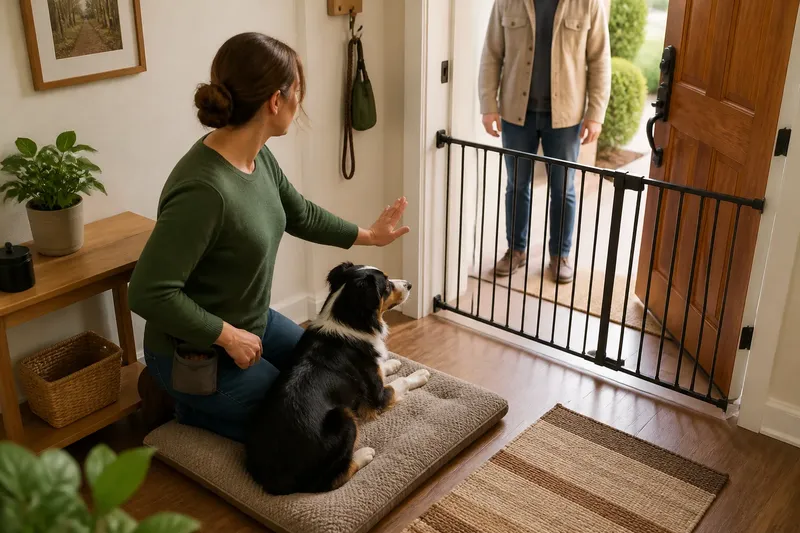
Open access does not mean every room has to be available at every moment. A dog may need a calm place away from visitors, cooking or children’s play, and people may prefer a closed bedroom or a protected work area. A comfortable bed and a simple gate can create limits without turning the rest of the home into a forbidden maze.
A flexible mix of indoors and outdoors
Some households use an outdoor area for supervised play or practical transitions, while treating indoor rooms as the dog’s main social territory. This can suit a dog that enjoys fresh air and a home with a secure, usable garden or courtyard.
An outdoor space is not a substitute for companionship or suitable shelter. Weather, noise, escape risks and the dog’s temperament all affect whether time outside is comfortable. The yard is best understood as one part of a daily routine, not a place to store a dog while the household carries on inside.
What does a dog’s place in the home change?
Where a dog rests and spends time influences what it can observe. A bed near the kitchen may let a dog watch family routines, while a quiet corner may help it switch off. Neither location is automatically better; look at the dog’s body language and whether it can settle without being disturbed.
Shared rooms also make household habits visible to the dog. Repeatedly stepping over a bed, moving bowls during meals or calling a resting dog to greet every visitor can make its space feel unpredictable. Agreeing on a few simple conventions—such as leaving the dog’s bed clear and allowing it to retreat—helps people treat the animal’s resting place as part of the home, not an obstacle.
For the household, indoor access brings practical decisions about muddy paws, food, furniture and boundaries. A washable mat near the entrance can contain wet footprints; a lidded bin can keep tempting scraps out of reach; a gate can separate a dog from a room during a busy moment. These are small adjustments, but they can make shared space feel easier to manage.
It is not worth trying to make every room look as though no dog lives there. Constantly shifting a bed to preserve a perfect arrangement, or scolding a dog for ordinary signs of its presence, can add friction without improving anyone’s comfort. Choose a few sensible boundaries and let the rest of the home show that it is shared.
How can you tell whether the arrangement is working?
Notice what the dog does when the household is calm, not only when something exciting happens. A dog that can lie down, move away when it wants, and return to people by choice is showing useful signs of comfort. Persistent pacing, repeated attempts to escape a space, or difficulty resting are reasons to reconsider the setup and seek professional advice if the concern continues.
Imagine a family whose dog keeps carrying its bed from the hallway into the sitting room whenever everyone gathers there. They could place a second bed in a quiet corner of the sitting room and observe whether the dog rests there during ordinary evenings. If it settles more readily but still moves away when the room gets noisy, the household has learned that proximity and a retreat can work together.
That small adjustment is more useful than insisting on one symbolic rule, such as “dogs belong outside” or “dogs must be wherever the family is.” A home changes through the day: deliveries arrive, meals are prepared, children play, and people need privacy. A good arrangement can flex with those shifts while keeping the dog’s needs legible.
What do people ask about dogs sharing a home?
Should a dog be allowed on the sofa?
That is a household preference, not a measure of how much a dog is loved. If the sofa is allowed, consistency helps; if it is not, give the dog a comfortable nearby bed and make the rule clear to everyone.
Does an indoor dog still need its own space?
Yes, a dog benefits from a place where it can rest without being handled or summoned. A quiet bed or crate with the door open can serve as a retreat, provided people respect the dog’s choice to use it.
Can a dog live mainly outdoors?
Some dogs spend time outdoors, but an outdoor-only arrangement can leave a social animal short of company and comfortable shelter. Consider the dog’s needs, the local climate and the quality of daily interaction before deciding, and ask a veterinarian or qualified behaviour professional if you are unsure.
How can a household choose its boundaries?
Start with the rooms that need protection or quiet, then decide where the dog can rest, eat and join family life. Keep the rules simple enough for every household member to follow, and adjust them if the dog cannot settle or people are repeatedly struggling with the arrangement.
What is the clearest way to choose?
Begin with the dog’s observable comfort, then fit the household rules around it. Decide whether a defined indoor base, broad room access or a flexible indoor–outdoor mix best suits the dog’s temperament and the home’s routine. Make the resting place easy to reach, preserve a quiet retreat, and use practical boundaries where they solve a real problem.
The long walk from kennel yard to living room is still happening in miniature, every time a household decides where a dog can settle. A dog’s place need not be the centre of every room or the edge of the property; it should be a dependable part of the shared home, with enough freedom to join in and enough quiet to rest.
For a dog’s place in the home, watch what the dog chooses when it is free to settle: the answer may be a mat by the sofa, a quiet corner, or a rotation between the two. That preference gives you a practical starting point for a home that feels shared rather than merely occupied.